Your cart
There are no more items in your cart
Why isn't the ball moving like it used to? How October humidity affects your pad
One of the most common mistakes among amateur players is thinking they are playing badly when, in reality, they are playing under different conditions.
As autumn progresses, especially during the early hours of the morning or in coastal areas, humidity levels increase. This affects several key elements of the court.
On the one hand, condensation can appear on the glass walls. On the other, balls tend to lose output and generate less acceleration after the bounce, leading to longer rallies and reducing the effectiveness of certain attacking shots.
That is why one of the first skills high-level players develop is the ability to read the conditions before the match even starts. Reading the court is just as important as technique or tactics.
What really happens to the ball
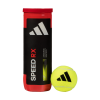
The internal pressure of the ball is one of the main factors affecting the speed of play.
When temperatures drop and humidity rises, the ball tends to provide less output and a lower bounce than in warmer conditions. As a result, the court feels slower, generating pace becomes more difficult and some attacking shots lose effectiveness.
This has a direct impact on several aspects of the game:
- Smashes generate less acceleration.
- Hitting the ball out of the court becomes more demanding.
- Defensive bandejas become more important.
- Lobs regain prominence.
- Rallies last longer.
This is one reason why many players even adapt their racket choice depending on the season, looking for a setup better suited to the playing conditions.
The factor that changes the game the most: the glass
If there is one element that is especially sensitive to humidity, it is the glass.
When condensation appears, the ball loses speed after impact and rebounds are usually shorter and less explosive. This is when you start seeing balls that should come off the glass more, but instead die earlier than expected.
From a tactical perspective, this has several consequences.
In defence:
- It is advisable to position yourself slightly closer to the glass.
- There is less reason to wait for big rebounds off the wall.
- Early-ball shots become more important.
In attack:
- Finishing points with smashes becomes more difficult.
- Deep volleys become more valuable than raw power.
- Holding the net depends more on patience than power.
In other words, when humidity rises, padel tends to reward point construction more than constant acceleration.
How to adapt to autumn conditions
The best way to play in these conditions is not to hit harder.
During the first games, use a few lobs and let some balls reach the glass to observe how the court reacts. Quickly identify whether the court is playing fast or slow and adjust your decision-making accordingly.
A good indicator is your smash. If the ball is not accelerating as expected or it is harder to hit winners, humidity is probably playing an important role.
In that situation, it is usually more effective to build points through deep volleys, bandejas and changes of direction rather than forcing premature winners.
Because in autumn your level does not change. The environment in which you compete does.